Slamdance returned to Los Angeles in 2026 to celebrate it’s second edition in the city of angels after moving from Park City , Utah (just ahead of Sundance’s own departure from the city). This grassroots festival was established by a group of filmmakers rejected by Sundance in the 1990s to provide an alternative to the mainstream festival circuit.

Whilst I wasn’t able to attend this year’s festival in-person due to a last-minute call up for jury duty, the Slamdance team made the event incredibly easy to cover for virtual attendees by providing advance screener access to the full lineup. This helped me to stay on top of the festival and stopped me from spilling the tea about the case I served on.

The 2026 festival featured 141 films, including 50 world premieres, selected from more than 10,000 submissions. The programmers maintained a strong commitment to diversity across the slate: 50% of the films were directed by female, trans, or non-binary filmmakers, and 41% by BIPOC directors. We love to see it!

Our coverage focused on international titles from outside the United States and Anglophone world. We’ve highlighted our standout feature films and short films from this year’s slate below.

Top Feature Films from Slamdance 2026

Whilst the Slamdance programmers place a lot of importance on local Los Angeles and U.S. filmmakers, the slate also included a wide selection of films from around the world. Here are our top three feature films from Slamdance 2026.


Zumeca

1. Zumeca (Dominican Republic)

Zumeca is a true epic. It draws from pre-colonial dramas such as Aguirre, the Wrath of God and Zama, as well as the cross-cultural romances of Dances with Wolves, to create a unique love story.

While it plays with the white-savior trope, it is not a white savior movie. Instead, it confronts the real brutality of the conquistador colonizers as Indigenous culture is dismantled by religion, weapons, and disease.

It’s carefully shot black and white cinematography, with a constantly moving camera reminiscent of Terrence Malick, gives the film the feeling of a modern classic.


Tony Odyssey

2. Tony Odyssey (Brazil)

Two friends rob their workplace to steal a futuristic drug that sends them on a surreal trip through the underworld in a wild range of Holy Motors-esque scenes, all speaking to the trauma of modern capitalism (and Brazil). Tony Odyssey is far from the perfect film. The scenes don’t flow particularly well, but their originality signals a new cinematic voice to look out for from Brazil.


Matapanki

3. Matapanki (Chile)

If you’re a fan of the Blaxploitation movies of the 1970s and 1980s, you’ll find some comfort in Diego Fuentes’ Matapanki. It’s a punk-sploitation movie in which a punk dude discovers that a mine-sweeped cocktail gives him superpowers. This sets him off on a revolutionary quest to take down the Chilean government… and the U.S. president himself. It’s raw, wild fun, and not to be taken seriously.

HONORABLE MENTIONS

It’s also worth your time to check out two of the Jury Prize winners: Whisperings of the Moon (Cambodia) and Silver (Bolivia). Whisperings of the Moon immaculately captures the feeling of falling in love with it’s Past Lives-esque story. Silver portrays the brutal landscape surrounding the Cerro Rico, one of the Spanish Empire’s largest silver mines, which continues to be mined by the Indigenous Bolivians despite the danger.

Top Short Films from Slamdance 2026

There was also a vast range of short films at Slamdance, from your expected animated, live-action, and documentary shorts, to experimental shorts and even video-game experiences! Here are three of our favorites.


Lost Wax

1. Lost Wax (Nigeria)

Omorose Osagie’s Lost Wax is one of the most beautiful-looking films of the festival, regardless of format. The shot composition and balance of black-and-white is truly awesome. The story bounces between different perspectives, creating an intriguing narrative that leaves much to the imagination through a mix of live-action and animation. I’m excited to see how Osagie continues to develop her storytelling in future projects.


We Used to Take the Long Way Home
Screenshot

2. We Used to Take the Long Way Home (Vietnam)

I’m a sucker for road trip movies, so We Used to Take the Long Way Home really struck a chord with me. It follows a high school road trip reunion, reviving old romances in a similar way to Cambodia’s Whisperings of the Moon (mentioned above). The film leans into high school nostalgia, using playful stickers to separate chapters and a goofy comedic character to inject humor. The 2000s are back!


3. La Mayordomia

Did you know that in the outskirts of Mexico City, and across the country, you can sign up to care for a 16th- or 17th- century baby Jesus doll? La Mayordomia introduces you to the world of these dolls; the people who loan them out, the requirements you must meet to be a candidate parent, and the mandatory handing-over ceremonies. It’s an engrossing glimpse into a unique religious tradition!

Honorable Mentions

If you want more, hunt down two magical-realist shorts: Loquita por ti (Spain) and Levantamuertos: Cumbia for the Dead (Mexico). The former is a romance set against the backdrop of bullfighting, while Levantamuertos follows a mortician who can speak with the dead.


For a diverse range of films from filmmakers you’ve never heard of, but might be the next big thing, the Slamdance Film Festival is one you need to attend. We discovered several filmmakers we’re excited to keep an eye on in the future to see how their work evolves.

Keep an eye on our film festival coverage page for more international films debuting this year.

Loveless Film Difficulty Ranking: 3

If you’ve seen Zvyagintsev’s Leviathan you need to see Loveless. If you haven’t seen Leviathan, what are you waiting for? Loveless is another dark drama from Zvyagintsev of epic proportions. It’s comparable to one of Shakespeare’s dark plays updated for the digital age. Plus, it’s not just a reflection of Russian society, but a reflection of all our lives.

Why Watch Loveless?
  • You can’t find better drama than this
  • It’s a story you usually don’t see on screen – what happens after the happy marriage – and yes, it’s dark
  • It’s the follow up to Zvyagintsev’s award winning Leviathan and it’s already won the Cannes Jury prize, you don’t have to rely on our opinion!
  • The setting! The snow and empty spaces make it even more chilling!
The Breakdown

Loveless starts with snow. It makes the town it falls on seem more serene; the calm before the storm. It’s the end of school for the day and the camera follows 12 year old Alexey as he walks home on his own. He finds a strip of police ‘do not cross’ tape and waves drags it along with him through the snow before throwing it into a leafless tree. Unlike his parents, he’s just a regular kid.

The opening 5 minutes of the film are focused on Alexey, but then the film is hi-jacked by his parents. When Alexey returns home, we find his parents arguing (they’re getting divorced). From their argument, we follow them through a day of each of their lives at work and their affairs for the next 30 minutes of the film. Alexey’s parents are doubly selfish. They steal the film’s narrative from him and also indulge in their own self-interests whilst they have the limelight. They force Alexey out of the film.

You may also notice the abundance of empty spaces and silence in the movie. The director may linger on a shot after the character has left or remain fixed on a character for slightly longer than normal. Zvyagintsev left these visual and audible pauses for us to give us time to think. This allows us to become ‘co-authors’ as we have time to add in our own interpretations. You’ll see that whilst Loveless is a Russian film, the message is relevant to all of us – making it possible to interpret.

Image result for loveless film

Conclusion

Loveless was one of the stand out films for me at the London Film Festival 2017. Just like Leviathan (which you should watch if you haven’t already) it’s storytelling is at the top level. On top of that, the visuals are a perfect compliment – they make the dark bits of the story darker, and offer us breaks to become co-authors.

Watch it when you can!


Persona Film Difficulty Ranking: 4

Do you want to be a film connoisseur? Well you can’t be if you haven’t watched Persona. The film has been for film critics what climbing Everest is for mountaineers, it’s the peak of the film world.

Here’s a peek at the opening 5 minutes to weird you out before you read on.

Why Watch this Film?
  • If you want to see something mysterious. If Christopher Nolan’s Memento is level 1 mysterious film and David Lynch’s Mulholland Drive is level 2, Persona is level 3.
  • To move on from the early (and also brilliant) Bergman films such as Wild Strawberries – this time it’s less philosophy and more experimental
  • For some shocking and hilarious images – I’ll explain below!
  • To see the beautiful black and white cinematography – this film really stands the test of time (it could have been made yesterday)!
The Breakdown

Bergman disorientates us in the introduction to Persona. There’s a lot of noise as a small light slowly brightens. It’s a gas stove lighting in slow mo. As your concentrating on the slow-mo Bergman chucks in a still picture of a penis like a subliminal message – did you notice it in the clip above? From that point I knew this film would be unique.

I was not wrong. This film is an experience. The disorientating introduction continues with a bunch of shocking imagery such as a tarantula walking across the camera and a clip of someone hammering a nail into their hand.

Why does Bergman try and disorientate us? He disorientates us to disrupt our viewing pattern. He doesn’t want us to watch this relaxed, he wants us to be active viewers and to work hard trying to interpret the film. After the unsettling intro we are introduced to two women: a film star that doesn’t talk and a young nurse.

The nurse takes the film star to the country for treatment. Sounds normal, but it becomes quite the opposite. Alone in the countryside their characters start to merge. Are the two characters one? If so is the nurse fantasizing about being a nurse or is the film star examining her own psyche? Either way this film is a must watch!

Conclusion

What a film! If you love films that leave you dumbfounded or lost in thought Persona was made for you! It has been one of the most debated films in film history alongside Citizen Kane and has inspired the works of David Lynch among many others. If you want to consider yourself a film buff, you have to watch it!


Wild Strawberries Film Difficulty Ranking: 3

Do you have a grouchy grandpa or a grumpy old friend? Well this is the perfect film to watch with them. It reminds of us of our mortality and explores the meaning of life. Are we better off grumpy or friendly – watch and decide. I admit, it’s not a barrel of laughs, but it is thoughtful, beautiful, and worth every minute of your time.

Check three reasons to watch it below. Then watch it here on YouTube.

Why Watch Wild Strawberries?
  • For the perfect introduction to Swedish maestro, Ingmar Bergman
  • To explore the meaning of life!
  • It’s one of the greatest road trip films (although it is completely different to the extroverted Hollywood road trip films)
  • To see some scary dreams and visions
The Breakdown

Wild Strawberries starts with Isak, a 78 year old professor about to receive a doctorate. He thinks how he has become lonely in his old age (in an inner-monologue that we hear from a lot in this film) before he introduces us to his family and goes to wake up his maid. He is ready for a road trip!

It doesn’t seem like anyone really likes him though. In his old age, he has become lonely because he doesn’t like hanging out with his family or community. To add to that, he is plain rude. Whilst driving, he chauvinistically tells Marianne to stop smoking because she is a woman, and feigns forgetfulness when she brings up how rudely he dismissed her relationship with his son.

Luckily, he begins to change as he starts to look back on his life. One particular dream sets him on this path. In this dream Isak stops outside a house with boarded windows. He anxiously walks to the left of the house, but doesn’t walk more than 10 steps (the camera stops him). He walks to the right, but stops himself again. He looks up at the town clock, but there are no hands on it to tell the time. Then he sees a hearse approaching. As it moves closer, one of the wheels of the hearse gets stuck on a lamppost and the coffin falls out. As Isak moves closer to close it’s lid, the hand of his own corpse tries to pull him inside. Is he already dead?

Conclusion

Wild Strawberries is one of Ingmar Bergman’s classics. It takes a grumpy old man who doesn’t care for his family or community and shakes him with dreams and visions to try and change him. The road trip is his journey to understanding the meaning of life.


Extraordinary Stories Film Difficulty Ranking: 3

This is storytelling at it’s finest. If you’re a fan of Borges or Pynchon’s mysteries you’ll love this film. Save this 4 hour wonder for a long journey or break it up into three viewings (with the 2 intervals). You can even try watching it here on YouTube.

Image result for extraordinary stories film

Why Watch Extraordinary Stories?
  • To see another great Argentinian film which is up there with Wild Tales and Secret in their Eyes (not the Hollywood remake)
  • Witness storytelling at it’s finest!
  • If you want 4 hours to go quickly (perfect for a long journey), otherwise this film is broken into three parts so easy to break into multiple viewings
  • Perfect for fans of Borges or Pynchon!
The Breakdown

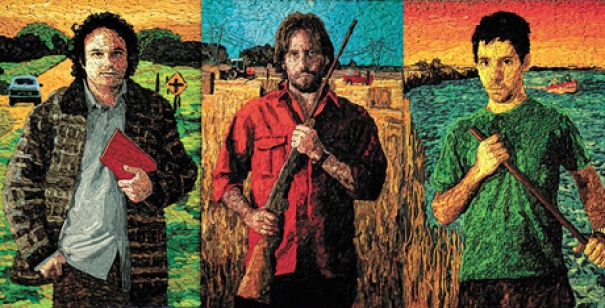
Extraordinary Stories starts with the story of X, a man walking down a road. He is walking to a nearby town, not really sure if he will find a job there. Whilst he is walking down the road, he witnesses a shootout in a farm field next to the road. Have the perpetrators seen him watching?

This opening episode makes up episode 1. Next up is the story of Z, a man who has just started a new job in a remote town. The third story centres a bet between two rivals.

Without giving anything more away, each of the three stories get more and more interesting and extraordinary as the film progresses. Each one progresses in 5-15 minute episodes and you are often left wanting to see more at the end, like a good TV series.

The strangest part is that you never really find out much about the three main protagonists (X, Z, and H). You never learn their name or their background; each of them remains a mystery. They reminded me of characters from a Borges short story or a Pynchon novel.

Conclusion

You won’t find storytelling better than this. I was skeptical about this 4 hour movie, but I couldn’t stop watching it after I hit play. The director gives you enough to pique your interest in each short episode, always leaving you wanting to watch more.